Pages

4 July 2013

Good science, bad science, and the battle for biotech crops

In the near future, food made from genetically engineered (GE) crops will be labeled, not because it will allow worried consumers to avoid it, but because it will be the ethical choice at the grocery store. Although the first generation of GE crops mainly focused on improving production, with such enhanced traits as resistance to insects and herbicide tolerance, the next generation of genetically engineered crops will be even better for the environment and farm workers, requiring fewer harmful and expensive chemical fertilizers and pesticides, and will have nutritional enhancements that will directly benefit consumers and particularly the poorest of the poor in food insecure countries.

Voluntary labeling: this soy sauce is clearly labeled as being made from soybeans that include genetically engineered varieties.

The GE crop varieties of the near future will be adapted to local climate and soil conditions, as well as local tastes and cultural idiosyncrasies. As such, the new generation won’t solely be developed by large multinational corporations like Monsanto, but also by local universities and small family-run businesses, and a significant proportion of these biotech crops will be cultivated using organic farming practices.  With public mistrust of biotechnology at an all-time high, these predictions seem far-fetched. Fortunately, scientists and government agencies worldwide are very aware of an urgent need for public education, which can ameliorate the spread of misinformation and fearmongering threatening one of the greatest tools for achieving the UN Millennium Development Goal of sustainably feeding a growing global population.

Improving the nutritional quality of crops is a Millennium Development Goal. These conventionally bred orange-fleshed sweet potatoes are higher in vitamin A than non-orange fleshed varieties. (Picture credit: Bill & Melinda Gates Foundation.)

The public perception is that there is raging controversy in scientific circles on the safety and utility of GE crops, with researchers arguing at the lab bench and in the field, and scientists locked in furious debate with one another at scientific conferences. However, this is simply not true. There is overwhelming scientific consensus on this issue (as there is on climate change, evolution, and the benefits of vaccination). Those who claim there is insufficient research on this topic are simply wrong. Many hundreds of peer-reviewed scientific papers have been published on many aspects relating to the safety of transgenic crops. The nonprofit GENERA (Genetic Engineering Risk Atlas) project curates the most extensive and complete database of these.  The vast majority of these studies (and I mean 99.9% of these, not just 51%) all come to the same conclusion: the risks to human health from consuming food made from GE crops are no different than those from consuming their conventional, non-GE equivalents.

This seems like an odd way of saying GE crops are safe, but the fact is that the very act of eating anything carries a small amount of risk anyway. Apart from the risk of food-borne bacterial infection (which can happen even with organic produce), we forget that plants don’t really want to be eaten: potatoes naturally produce a toxic alkaloid called solanine to protect themselves; celery naturally produces psoralens, a type of chemical that can cause severe skin burns; unless cassava, a staple crop for much of Africa, is properly prepared, it can lead to cyanide poisoning; and even seemingly innocuous red kidney beans are always served cooked, to deactivate a naturally produced protein called phytohaemagglutinin which causes severe vomiting and diarrhea. Saying something is good for you simply because it’s natural is a fallacy: arsenic is natural and that’s clearly not something anyone wishes to put in their body. Using biotechnology is just one way we can ensure our crops produce more of the nutritional molecules we need, and less of the harmful ones we don’t.

One way that cassava can be improved for human consumption is by reducing the amount of linamarin, a naturally occurring sugar that  releases hydrogen cyanide when broken down by the digestive system. (Picture credit: Bill & Melinda Gates Foundation.)

The leading scientific agencies, including the AAAS, the National Academies of the United States, the European Food Safety Authority, and the WHO have issued very clear statements emphasizing the scientific consensus on genetically engineered crops: the process of genetic engineering poses no threat to human health, and farming of biotech crops can lead to great economic and environmental benefits. Despite this comprehensive body of knowledge (and through manipulation by the anti-GMO movement), the media has focused undue attention on a very small number of studies that claim the opposite of the scientific consensus on the risks GE crops pose to human health and the environment. This is likely in an effort to ensure journalistic balance; however, there really aren’t two sides to the science here. Almost invariably, these contrary studies are exercises in bad science published in low-ranking journals by a few dissident scientists, often with conflicts of interest. Giving this much exposure to bad science can be downright dangerous: in the case of AIDS denialism, the South African government’s adoption of the fringe cost many human lives.

Thankfully, the South African government has since changed its stance on antiretroviral therapy, but the German government has still not approved the planting of MON810 corn (engineered with a bacterial protein that prevents caterpillars from feeding on the plants, diminishing the need for harmful chemical pesticides) despite the fact that the vast majority of evidence suggests it poses no danger to non-target organisms. These regulatory decisions were based on a very small number of poorly conceived or inconclusive studies that could not subsequently be duplicated by other laboratories, ignoring the vast number of scientifically rigorous studies that indicate that these crops are harmless to other insects.

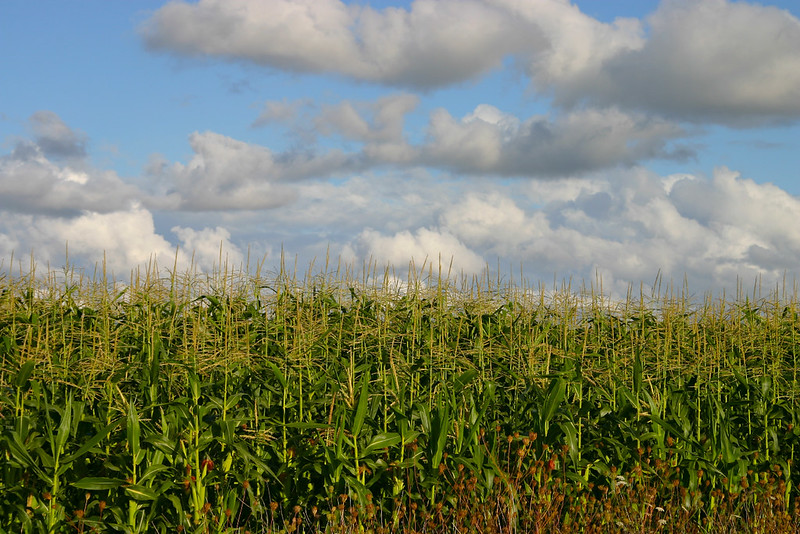
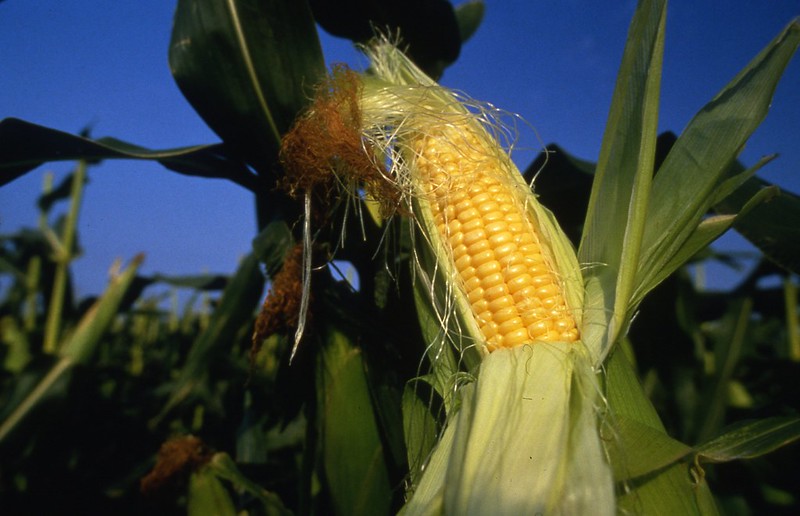
A large body of scientific evidence indicates that corn engineered to be resistant to insects is safe for human consumption.

Again, a few insubstantial bits of data cannot sufficiently contradict a very large body of scientific knowledge and do not constitute “scientific controversy”. Nevertheless, and quite understandably, laypeople react emotionally to this perceived controversy, because it is presented to them as whistleblowing by the news sources and environmental and health blogs they trust. This makes otherwise rational people don honeybee costumes and pretend to die in public spaces in protest of GE crops (even though the use of engineered crops instead of pesticides increases biodiversity, and there is mounting evidence that a combination of pathogens and conventional pesticides may be what’s truly decimating bee populations). People are protesting GE crops because they feel they have been informed and need to be upset about something, when what they should be upset about is how scientific ignorance is being employed as leverage by special interest groups to divert attention and energy away from what we really need to be doing to fix the world’s food and agriculture systems.

At the March Against Monsanto held on the 25th of May 2013 in various cities across the world, anti-GMO protesters held up images of rats covered in large cancerous tumors, ostensibly caused by feeding on GE corn. The images came from a 2012 paper by Gilles-Eric Séralini of CRIIGEN, an anti-GMO group, and published in the journal Food and Chemical Toxicology. It purported to provide evidence that consuming corn engineered with a bacterial protein conferring tolerance to the herbicide glyphosate (sold by Monsanto under the trade name Roundup) causes cancer.  There were several serious problems with the study, from bizarre statistical manipulation of the data, to insufficient numbers of control rats. But the most glaring shortcoming was the fact that none of those gruesome images of rats were accompanied by images of healthy control rats. This is because the control rats (fed a non-genetically engineered diet) also developed tumors: the strain of rat used in the study is used to study chemotherapy drugs, and were bred to naturally develop tumors at a very high incidence. They were entirely inappropriate for this kind of study, and none of the data could be used to make the claims they tried to make. The Séralini paper has now been thoroughly discredited by several scientists, science journalists and scientific agencies. The whole fiasco is such a classic example of bad science that it now even has its own Wikipedia entry. However, a 2013 paper by Anthony Samsel and Stephanie Seneff, published curiously enough in the small physics journal Entropy (note, not a journal focusing on biology), again spurred alarming news reports. This pseudoscientific paper claimed that Roundup is the cause of a mindboggling array of diseases, including Parkinson’s disease, diabetes, and autism. However, the Entropy paper was written by authors who aren’t even biologists at all, documented no actual experiments, and in fact cited Séralini’s discredited study as a reference for a number of arguments they made. Again, this paper was adequately debunked by scientists and journalists. Dr Ariel Poliandri of the Cancer Division at Imperial College London promptly compiled a useful guide to detecting bogus research: in short, important research is published in important journals. If it’s not, be wary. It’s interesting to note that both these papers were published in low-tier pay-to-play journals with inadequate peer review. If this was really the solid, groundbreaking work it claimed to be, it would have been published in one of the big science journals, whether open-access or not. This stuff all looks and sounds very “sciencey”, but is not real science, and not only damages the good reputation of science in the public eye, but is now having a dangerous influence on governmental policy on GE crops all across the globe, with the governments of countries like Russia and Kenya basing much of their biotech policy on the little trickle of bad science, instead of the large volume of good science.

Even though it has been thoroughly discredited, anti-GMO protesters still use images from the infamous Séralini study. (Picture credit: Bill Baker.)

In an idealized world uncoloured by political agenda, the endeavours of science are neutral. Most scientists you’ll talk to about genetic engineering are in fact neither opponents nor proponents of GE crops: they only care about what the scientific evidence says. If the sum total of the scientific evidence said otherwise, the scientific consensus would change. (Disclosure: I am a plant scientist who studies the genes of cereals. I’m neither involved in the production of transgenic crops, nor am I funded by any companies that are.) It is not the job of scientists to increase public acceptance of genetic engineering, it is the job of scientists to increase public trust in and understanding of the scientific data: in this case the data overwhelmingly says that GE crops are safe. But perhaps where science needs most help is in explaining itself. The Proceedings of the National Academy of Sciences are impenetrable to the public, but Dr. Oz gets beamed into every home with a friendly smile and a whole dose of hokum. Everyone should have a basic level of scientific literacy, so that we can stop expending so much energy on fighting misconceptions about science. Recently British environmentalist Mark Lynas, who helped start the anti-GMO movement in the 1990s, apologized for demonizing agricultural biotechnology and feeding into anti-GMO conspiracy theories, and some influential bloggers are also starting to let go of old, misinformed points of view. My hope is that sometime soon everyone will agree that biotech crops, like organic farming practices, are part of a larger set of really useful tools for sustainable agriculture.

10 June 2013

Embrace the biotech in your basket

Scientists are very good at explaining what it is they do—to other scientists. However, they are notoriously bad at explaining their research to the general public. Science is currently facing a PR crisis, as evidenced by polarizing media coverage of such topics as climate change, vaccinations, and genetically engineered crops. Growing public mistrust of agricultural biotechnology is especially disconcerting. During Norman Borlaug’s Green Revolution of the 20th century, agronomists developed small-growing but high-yielding varieties of the world’s staple crops. These advancements in crop science are widely celebrated for saving billions of people from starvation. But in the 21st century, we’ve shifted from such public reverence for agricultural science to consumer rage and bewilderment in the produce aisle. How did we get here?

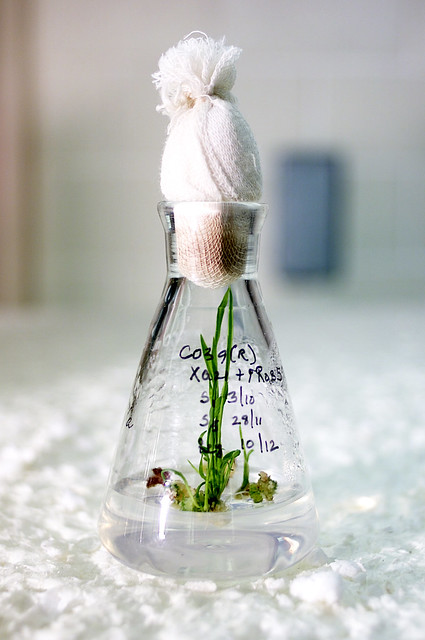
Rice plants in tissue culture. (picture credit: IRRI)
In doing your own research on a topic like genetically modified organisms (GMOs), you’ll come across online articles to support almost any claim. Figuring out whether those claims are made with authority and are based on sound science can be tricky. Just because something uses a lot of jargon and sounds ‘sciencey’, it doesn’t necessarily mean it is. Genetically engineered (GE) crops are some of the most intensively tested food we’ve got. The overwhelming scientific consensus from many large-scale studies published in leading peer-reviewed scientific research journals says that GE food crops pose no additional risk to human health and do not have nutritional profiles different from those of conventional crops. Entire nations of people have been eating them for a long time now, with absolutely no health problems that can be attributed to GE technology. Studies promoted by anti-GMO campaigners as supposed evidence of the harmful effects of consuming GMOs on our bodies are taken out of the context of the larger scientific consensus, and most often consist of dubious, inadequately reviewed research. Dissidents insist on touting badly designed junk science studies, attempting to generate the perception that there is disagreement in the scientific community, when this is not the case. The media, in a misguided attempt at reporting with balance, tries to give equal weight to both sides of the story. However, just like the scientific consensus on the theory of gravity, there really is no other side to the story—there is only gravity.

(picture credit: Oregon Dept. of Agriculture)

With the recent rejection of California Proposition 37, labeling of food made from GE crops has gained more media coverage worldwide. Merely labeling a product “contains GMOs” makes it seem like a warning of some sort, and in fact does not allow a consumer to make an informed choice at all.  It’s simple scaremongering, and a wasted opportunity to educate. As a consumer, I might want to know that a product is made from a crop engineered to use less chemical fertilizer bad for the environment, or to require less pesticide that might be harmful to farm workers. Food labeling helps us all make informed decisions, and it’s how that labeling is done that makes the difference.

(picture credit: Oregon Dept. of Agriculture)

We need to grow more and better food on less suitable land under increasingly variable climatic conditions. The best way to ensure future world food security is to combine biotechnology with sustainable agricultural practices. Subsistence farmers, growing crops like cassava and sorghum, stand to gain the most as scientific research expands beyond industrial commodity crops like maize and soybeans. Current and future research efforts will focus on engineering traits of direct benefit to the end consumer, delivering more nutrients to those suffering from hidden hunger, such as Golden Rice, engineered to help alleviate vitamin A deficiency.
Because of scientific progress, we are living healthier, longer lives than ever before in the history of our species. So embrace the biotechnology in your basket, because scientific agriculture is the greatest tool for sustainable living on this planet into the 21st century and beyond.

18 August 2012

Gone are the glory days of the glory pea

Phillip Island, as seen from Norfolk Island. Problems with soil erosion persist to this day, as evidenced by the red patches free of vegetation.

In the southern Pacific Ocean, somewhere between Australia and New Zealand, lies Norfolk Island. In 1774, the HMS Resolution brought Captain James Cook to its shores, as part of his great voyage to discover the mythical southern continent Terra Australis. Cook and his men explored Norfolk island and two smaller offshore islands, Nepean and Phillip. Uninhabited and with sheer sea cliffs, Phillip Island in particular appeared lush, with dense scrub and forest growing in its rich volcanic soil. What secret wonders of nature were hidden in its valleys?

Gone: the glory pea (Streblorrhiza speciosa).
Austrian botanist Ferdinand Bauer visited Phillip Island (named in 1788 for Arthur Phillip, first Governor of New South Wales) in 1804 on a collecting trip. One of the plants he discovered was a striking new member of the bean family. So unique was this plant that, upon receipt of Bauer's herbarium specimen back in Vienna, botanist Stephan Endlicher gave it its own genus, naming it Streblorrhiza speciosa. It quickly acquired the common name of glory pea: a scrambling woody vine, producing cascades of gorgeous pink blossoms. This was a plant that deserved to be grown by gardeners everywhere. Once introduced in Europe, the glory pea was an instant hit. Every nobleman with a conservatory wanted one. However, the glory pea proved quite difficult to grow well. Most gardeners kept it in pots in greenhouses. With its roots restricted by container gardening, instead of the deep volcanic earth of its island home, the glory pea flowered erratically. It gained a reputation as being intractable, and began to fall out of vogue.Why dedicate greenhouse space to something that promises a spectacle, but that you cannot get to flower? Within fifty years, no one was cultivating it any more. Which was such a big mistake.

Back on Phillip Island, something was going disastrously wrong. On his 1830 collecting trip there, English explorer Allan Cunningham noted that the "vegetation was thin on top and there was severe gullying in the valleys". This was neither the lush island discovered by Cook, nor that so gleefully explored by Bauer. Naturally, there's an anthropological component to the decline of the island. For you see, in 1788 goats and pigs were introduced as food for the newly established penal colony on Norfolk Island. Rabbits soon followed, precipitating ecological disaster. Pretty soon, the overgrazing of Phillip Island became so severe that all the goats and pigs died from starvation. As can be seen from the photo above, the island is pretty much a desert to this day, plagued by soil erosion. It took until 1986 just to eradicate all the rabbits, and projects are currently underway to remove some introduced plant species as well. The long term goal is to restore the natural vegetation of Phillip Island to its former glory. But, tragically, without the glory pea. Researchers have made several attempts to find surviving specimens of Streblorrhiza speciosa still hidden in the valleys of Phillip Island, but to no avail—the glory pea is listed as extinct on the IUCN Red List. The botanical illustration above and a handful of dried herbarium specimens are all that remain now.

If only those gardeners had known the value of ex situ conservation back then. If only they had realized that they could have saved the glory pea from oblivion. But perhaps, within the ancient walls of a palace garden outside of Vienna, or in the conservatory of a crumbling English manor house, someone had thought, Oh, might as well, and kept a specimen of the glory pea alive all these years. Hope lies dormant, like seeds buried deep in volcanic soil.


Picture credits:
Boat with Phillip Island in background by Steve Daggar
Plate of Streblorrhiza speciosa by Miss Drake in Lindley (1841)

12 August 2012

The mace pagoda: phoenix of the Cape

Adderley Street Flower Market, early 20th century.

One morning in 1847, German botanist Karl Zeyher stopped at Cape Town's Adderley Street Flower Market, like he often did. The flower sellers, as colourful as their wares, were only too eager to show him their latest finds, obtained on long and often dangerous expeditions into the rugged Cape Mountains. Among the bunches of proteas and irises blooming in deep buckets of water, Zeyher noticed something unusual, new. Well, new to science.

Marsh rose (Orothamnus zeyheri).
Slender, woody stems covered in an armour of velvety leaves supported nodding, crimson blooms: it was the marsh rose. He managed to coax the secret of this splendid plant's location from the seller, who told Zeyher he had collected it from the mountainsides above what is now Pringle Bay. In due course, Zeyher located the plant and sent specimens back to Europe. Fellow German botanist, Karl Pappe, gave it the scientific epithet Orothamnus zeyheri, after his colleague. One could argue that it would have been more fitting to name the marsh rose for its original discoverer, but this was colonial South Africa, and botanists of colour, no matter how intrepid, were unlikely to see their names recorded in the annals of history. However, this wouldn't be the last time the flower merchants of Adderley Street would bring something special to the attention of science.

The mountains of the Kogelberg Biosphere Reserve.

T.P. Stokoe amongst the marsh roses.
In 1911, Thomas Pearson Stokoe left his job and his wife and daughter behind in Sunderland, England, got on a ship, and arrived in Cape Town to start a new life as a lithographer for the Cape Times. Inevitably, he became enamoured of the wild places, exploring the mountains to look for new species whenever he could. Upon exploring the fynbos of the Cape Peninsula for the first time, he remarked, "I hesitated to trespass over what I thought was a private garden. Eventually I ventured forward and was thrilled at the sight of so much floral beauty." His desire to seek out novel plants would end up driving him into the hidden peaks and secret valleys of the Kogelberg, clear on the other side of False Bay. And what a place it is. The Kogelberg (Dutch for Cannonball Mountain) towers 1,265 m above the ocean, its ring of severe cliffs simply studded with unique plants. Today, the Kogelberg Biosphere Reserve (a UNESCO World Heritage Site) is home to some 1,600 plant species, of which about 150 are totally endemic to this part of the Cape Floristic Kingdom. The core 320 square kilometres of the reserve harbour more species richness than any other place on Earth of a similar size, including the dense rain forests of the tropics. It's enough to give heart palpitations to any biodiversity fan. Almost every valley and mountainside supports something unique that lives there and only there. Some plants have an entire range limited to a few square metres on a single mountain slope. This place is precious. This place is delicate. This place is magical. Even the genus Protea (the very quintessence of the fynbos biome) is named after Proteus, the ancient shape-shifting sea god. A place of fog and fire, it's easy to imagine the Kogelberg as the home of mythological creatures.

Mimetes stokoei type specimen.
In February 1922, somewhere in the Kogelberg range, Stokoe came across a single specimen of a very unusual and beautiful plant, a tall and elegant member of the protea family. He collected flowering branches as herbarium specimens and sent them to the Royal Botanic Gardens at Kew, where it was described and named Mimetes stokoei, in his honour. Today, this plant is commonly known as the "mace pagoda". However, Stokoe himself always referred to it as his "golden protea". Whatever you'd prefer to call it, something weird was going on. Why was there only one plant on that hillside? Stokoe felt the mysterious and inaccessible Kogelberg, windswept, often wrapped in dense fog, calling out to him. He had to find another specimen. Subsequent collecting trips proved fruitless: it was like his golden protea had never existed at all. On 4 July 1925, Stokoe was perusing the wild flowers sold by the vendors in Adderley Street, when an old friend caught his eye. You guessed it: plunged into a deep bucket of water were the tall and elegant flowering stems of Mimetes stokoei. Stokoe bought the branches from the seller and proceeded to question her about their origins. The seller was less than forthcoming with the information: collecting sites were closely guarded secrets for people whose entire livelihoods depended on bringing the most exotic specimens to Adderley Street. Stokoe was relentless however, and after much persuasion, a deal was struck. With the merchant's supplier as his expert guide, Stokoe set off on an expedition into the Kogelberg range. In due course, the flower picker revealed to him a small stand of Mimetes stokoei, rising elegantly above the other vegetation. It was clear the mace pagoda was scarce; all told, Stokoe and his flower seller friends could only locate ten plants, in two small populations. What was more worrying, though, was that they were all old, mature plants, not seedlings. And it seemed that the plants were in trouble. Senescing. Withering. Dying. By 1959, Mimetes stokoei was listed as extinct.

CapeNature huts in the high valley of the Kogelberg Biosphere Reserve.

Marie Vogts, doyenne of proteas.
The overexploitation of the Cape's vulnerable flora became a growing concern after World War II, and the Adderley Street merchants were no longer allowed to collect flowers from the wild outside of a stringent permit system. In the 1960s, the South African government endorsed active research in the horticultural potential of fynbos, and proteas in particular. Instrumental in this movement towards horticulture as a form of conservation was Marie Vogts. Starting as a lecturer in Botany at the Paarl Teachers' College, she has written seminal works on growing proteas as garden plants and with her expertise and passion for Cape flora has done more to popularize fynbos than anyone. In 1960, she was appointed as a senior professional officer by the Department of Agriculture, and initiated plans for Oudebosch, an exciting experimental protea farm. It would be a permanent collection of horticulturally important species, and also a place of active scientific research. Vogts wanted to conduct transplant experiments: would proteas transplanted from the Cape Peninsula still flower at their regular time, or adapt to the flowering rhythms of their new home? In 1965, Vogts started developing Oudebosch in the high valley of the Palmiet River, deep in the Kogelberg. So how does one start a garden if there's already natural vegetation growing on the land, you may ask? In this case, the vegetation around the plots was clear-cut. Sometimes, however, it's easier just to burn it.

The solitary seedling, 1967.
In 1966, a weird weed sprouted in the Oudebosch nursery, right at the edge of a planting hole. Researchers realized with shock what it was: Mimetes stokoei, resurrected. The only mace pagoda in the entire world. The plant was beyond precious: here was an opportunity to obtain some seed, to save the species. A little protective wooden tripod was constructed around the seedling. This was a mistake. The Kogelberg is known for capricious weather: one morning after a fierce storm, the mace pagoda was found with a broken stem; high winds had snapped it against the very structure put up to protect it. It never even had a chance to flower. The year was 1969, and Mimetes stokoei was declared extinct all over again. So put yourself in Marie's shoes: you've managed to site your experimental farm right on top of the original location of the mace pagoda, all because the old botanists kept that location secret in their own attempt at conservation; clearing and trampling the site during construction of the nursery possibly doomed any other seedlings to oblivion; and when one still managed to sprout against the odds, it dies on your watch. You have such great passion for proteas and for nature conservation, yet in your preservation attempts you inadvertently cause the loss of the rarest one of all. Now: what do you feel? A terrible burden of responsibility? I certainly would, and I think Marie did, or at least accepted the criticism of her peers with good grace. In 1973, a new protea breeding program was started at Tygerhoek in the Overberg, 150 km from Cape Town, and the Oudebosch protea collection was moved there. The Kogelberg was transferred from the Department of Forestry to CapeNature in 1987 and declared a nature reserve. Marie Vogts passed away in 1998, one year before a devastating fire swept the Kogelberg. The fire that absolved her.

The mace pagoda, Mimetes stokoei, in bloom in the Kogelberg in March 2009.

The March 2011 fire creeping across the Kogelberg.
In December 1999, the Kogelberg Biosphere Reserve was engulfed in flames. Four days of hot dry winds fanned runaway blazes, resulting in more than half of the reserve being burnt to ash. However, fynbos has evolved to deal with fire, and exploit its capacity for clearing space and returning nutrients to the soil. Previous wildfires had occurred during winter; the summer monster of 1999 was much hotter. That made all the difference. For you see, Mimetes stokoei is a botanical phoenix, rising anew from its own ashes. It grows very rapidly, towering above the other fynbos, but it has a very short lifespan, perhaps ten years at most. This might explain why Stokoe saw plants that looked past their prime, back in the 1920s. This remarkable plant instead relies on its seedbank, buried in the earth by ants, to start a new generation of plants from scratch. It's as good as if your parents had to die before you could be born (for this analogy to work, pretend that humans lay eggs, okay?) and every generation lived out their entire lives in isolation. What would be a very strange life cycle for us makes sense for plants rooted to a landscape prone to frequent fires. The seeds of the mace pagoda have been lying dormant all this time, until a fire hot enough to awaken them arrived. The amazing thing is that the locality where Mimetes stokoei grows had likely not seen a superhot fire since the early 20th century. Disturbing the soil at Oudebosch during construction of the experimental farm only enabled one seedling to sprout; subsequent controlled burns of the site were never hot enough to awaken any others. But many dormant seeds were still present, under Marie Vogts' nursery, under her feet, waiting patiently. If only she'd known.

In January 2001, reserve manager Mark Johns, out on a burn recovery inspection, noticed 24 unusual silver-leaved plants amongst the lush green post-fire vegetation of a hillside: Mimetes stokoei, the phoenix of the Cape, resurrected by the 1999 fire. The pagodas were growing strongly, rapidly: the first flowering occurred in 2004, with peak flowering reached in 2007. By 2009, the population already seemed to be in decline again, with only five plants left alive. With so much human activity, the incidence of fire in the Cape Floral Kingdom is on the rise. This is not a good thing. Fynbos species don't all deal well with frequent fires, most species instead thriving on a single hot inferno every 15 years or so. On 17 March 2011, a fire started alongside the road to the Bot River Estuary. Since the coastal sand flats are heavily infested with alien plants now, the fire rapidly blazed out of control, spreading into the high valleys of the Kogelberg. The tiny mace pagoda population got torched, and the regal flowers seen in 2009 are gone. For now: we know enough about the biology of Mimetes stokoei now not to call it extinct just because it is cycling between generations. The hottest flames will summon the fynbos phoenix.


Picture credits:
Kogelberg by FrikH
Kogelberg Biosphere Reserve by Ralph Pina
Oudebosch seedling by Fred Kruger
Mimetes stokoei, March 2009 by Nigel Forshaw
2011 Kogelberg fire by Ralph Pina

For much of the research in this story I am deeply indebted to the work of Peter Slingsby and Amida Johns. If you want to know more, purchase their scintillating and wonderfully illustrated biography of T.P. Stokoe here.

27 November 2011

Welwitschia: curious cone-bearer of the Namib

This is no ordinary tree trunk.

It was a hot afternoon during my freshman year and I was trying to find my botany professor's office. Sweat running down my spine, already late for organic chemistry, lost in the basement of the Botany building. I turned a corner and came face-to-face with the giant, scalloped remains of a welwitschia, mounted on a pedestal. Clutching the ethnobotany paper I was meant to submit that day, I just stood there, enraptured, mesmerized. It resembled something creepily organic, like Martian fungus, or at least something indecent that had sprouted from the sea floor. Certainly not a tree trunk. I never made it to organic chemistry that day.

Welwitschia mirabilis makes the scorching Namib desert its home.

Not only is Welwitschia mirabilis the solitary member of its genus, but it is also the only member of its family, the Welwitschiaceae. In fact, it is taxonomically so bizarre and so unique that it has been given its own order. The only other species that appear to be (quite distant) kin are the joint-pines of genus Ephedra. Wait, did I say joint-pine?! Yes, I did. For the welwitschia is a short, stunted gymnosperm and bears its seeds in cones, just like pines, firs and spruces. Think about that for a while. This weird tree is found only in the Namib desert of Namibia and Angola, a habitat as different from a dark northern forest as any, the oldest desert on the planet. It is estimated that welwitschias have been growing here for nearly 100 million years, and that they haven't changed much during that time. The welwitschia has many fascinating adaptations that allow it to thrive in this harsh climate. It survives in places where it sometimes doesn't rain for years, subsisting solely on the fog that rolls in from the Atlantic at dawn.

Alien vegetable forms dot the landscape inside Messum Crater, Namibia.

Its short woody stem is unbranched, but grows wider with age to form a crenulated woody bowl that can be a meter in diameter. Like most moisture-dependent desert plants, welwitschias are pretty slow-growing: it is estimated that large specimens with leaves in excess of 6 m long may be more than 1,500 years old. From the margins of the crested stem sprout what appear to be a myriad of strappy leaves. 

A large specimen in the Namib-Naukluft National Park.

Their appearance is deceptive. In fact, the welwitschia only produces two opposing leaves that continue to grow throughout the life of the plant, becoming split and shredded through the action of sand and wind and centuries. The shredded leaves become a trap for wind-blown debris, enriching the sandy soil around the plant and providing shelter for insects, spiders and lizards. Welwitschias have a large taproot to pull moisture from deep underground, and also a network of short fibrous roots near the surface to help them absorb water from ocean fog that condenses on the leaves and rolls to the ground. In a way, these plants engineer their own microclimate to ensure their survival in extremely arid surroundings.

Welwitschia bugs on the cones of a female plant.

As I mentioned, the reproductive structures of Welwitschias are cones, like those of cypresses and cycads. Male and female plants exist separately, bearing different types of cones. Male cones produce pollen, but not in copious amounts like those of wind-pollinated pine trees do. Instead, they rely on insect pollinators to carry their precious cargo to a receptive female plant. The plants are often found crawling with yellow or vermilion coloured welwitschia bugs, Probergrothius sexpunctatis, attracted by the sweet nectar secreted by the immature cones. However, these bugs don't seem to be the pollinators, and other insects have been suggested as the culprits, including flies and wasps. In the unforgiving desert, welwitschias have maximized their chances of survival, especially at the vulnerable seedling stage. When released from mature cones, welwitschia seeds may remain dormant in the sandy soil for several years until heavy rains come to the Namib. Only then does a new generation of Welwitschia mirabilis germinate. All in unison.  

Picture credits:
Welwitschia trunk by Routard05
Welwitschia in habitat by Derek Keats
Messum Crater by intelligentinfo
Naukluft specimen by Joachim Huber
Bugs on cones by Jerry Oldenettel

7 November 2011

Tasting fractals: true confessions of a synesthete

Matcha green tea caramels: a volcano of taste.

We were at a bar, discussing the latest lab gossip over flutes of winter ale, when Lyndsay suddenly dug through her bag and presented me with a small, square piece of green candy, wrapped in clear cellophane.
'Our postdoc brought me some of these caramels from Japan,' she said. 'This one's green tea. You should try it.' So I did. An interesting and delicious combination of buttery caramel and invigorating matcha green tea flooded my palate.
'It tastes sort of this shape,' I said, miming a mountain with my hands. 'Sort of...volcano-like. It's rounded, but there's a pronounced indentation at the top where the green tea and the butter caramel intersect.' Both Eric and Lyndsay stared at me as if I'd just confessed to setting a toddler on fire.
'So tastes have shapes to you?' Eric asked.
'Well, kind of,' I said. 'They're more like landscapes than free shapes.' I hesitated. 'But we all have that, right? It's not like I have synesthesia or anything like that.'
'No, Leon, no one else has that,' Lyndsay affirmed. 'No one else tastes shapes.' Eric just laughed, shaking his head furiously. As the first snow of winter started sifting down from pink clouds hugging the town, I started to reconcile myself with the fact that I may have synesthesia.

People with synesthesia show increased connectivity and communication between parts of the brain normally devoted to the processing of different sensory stimuli.

Synesthesia is commonly defined as a neurological condition where stimulation of one of the senses elicits involuntary triggering of another sense. People with synesthesia are dubbed synesthetes, and synesthesia can take many different forms. Some people experience vivid colours when hearing specific sounds (C sharp on the piano sounds golden yellow). Others associate personalities with numbers (4 is such a guarded, introspective number). Still others might associate textures with specific smells (sandpaper smells like strawberries). Much research has been conducted on the cause of synesthesia, suggesting enhanced cross-talk between brain areas usually devoted to separate sensory pathways (see here for an extensive reference list, both peer-reviewed and otherwise). For example, when people who experience coloured-hearing synesthesia are stimulated with spoken words while inside an fMRI, the areas of the brain devoted to the processing of colour information light up like they were watching the psychedelic Star Gate sequence from 2001: A Space Odyssey. The brains of control subjects who don't have synesthesia do not light up in this way, even when they were extensively trained to associate words with specific colours. Science is also beginning to make some progress on the genetic basis of some of the more common forms of synesthesia, with evidence from large-scale genome-wide association studies implicating specific regions on several different chromosomes.

Hearing colours can be quite the space odyssey.

But what about me? My apparent synesthesia has not been confirmed by a neurobiologist, and I've had none of my genes sequenced. Synesthetes are more likely to be left-handed. I'm left-handed. About 40% of synesthetes have a close-relative who also has synesthesia. I...well, I don't know. I've never asked them, and perhaps they, like me, haven't thought it anything unusual and therefore never mentioned it. Also, my kind of synesthesia, morphogeusia (from Ancient Greek morphe, 'form' and geusis, 'taste'), seems to be one of the weirder ones. In addition to taste, it also involves my sense of smell to some extent. I once started to describe the scent of a colleague's perfume as 'very tall, sort of skyscraper-shaped, but with a top that resembles a bisected sphere with indentations...' before trailing off when I saw her raised eyebrows.

Ceylon black tea.

Let me explain what is happening to me. Basic tastes and flavours have pretty basic shapes, and these shapes are not so much felt as seen; they're topography, not texture. All fats and oils elicit the same perception of rounded mounds. Butter is distinctly dome-shaped. This partially explains why those buttery green tea caramels tasted volcano-shaped: it's that mountain of buttery goodness! The taste of rooibos is also rounded, but concave in contrast to the convex dome of butter. Rooibos is therefore bowl-shaped to me, and able to contain other flavours (like the bullets of vanilla), whereas the domed heavy cream of a crème brûlée would go over the top of vanilla. Incidentally, real vanilla is fat and short, whereas artificial vanilla is taller and thinner, more like a rifle cartridge. I had a fine cup of black tea the other day that tasted much like a flight of stairs. Sharp, pungent ingredients like raw onions or wasabi tend to taste like valleys or canyons, and the sharper they are, the more sheer those cliff faces become.
Eggs over easy.

Initially, I took that fact that not every taste seemed to have a shape as evidence that I didn't actually have synesthesia after all. Surely everything must elicit a well-defined topography! But then I realized that it's merely harder for me to see the shapes of things such as eggs and french fries; it's not that they lack landscape, it's just that the topography of that landscape is really shallow. French fries are just shallow ripples, whereas an egg forms a shallow depression, like a dried lake bed. Perhaps surprisingly, the extent of a synesthetic shape does not correlate with my enjoyment of a particular foodstuff. I like both eggs and french fries and don't find their taste one-dimensional, regardless of how shallow and dull their synesthetic features are.
Tart cherries, with a lingering oak finish.

While still an undergrad, I was recruited to a university tasting panel by a friend majoring in food science. Soon my palate was required to evaluate all manner of things, from frozen vegetables to chocolate milk. The sensory evaluators commended my vivid gustatory descriptions for new flavours of potato chips they were developing (though I was careful not to describe them as 'salt flats with interspersed pyramids' or anything similar). However, I'm not a supertaster by any means. Neither do I possess a particularly sophisticated palate. All wine resembles a generic jungle canopy to me. It's as difficult for me to tell one pinot noir from another as it is difficult for me to discriminate between a rain forest from Bolivia and one from Ecuador. Highly complex flavors elicit landscapes that are not very memorable and exceedingly difficult to describe, like the faces of strangers you meet in a dream. What synesthetic shapes did that chilli verde from the other night conjure up? I don't recall exactly, but there was some granularity, I'm sure...
So that's my little personal subjective anecdote about maybe perhaps having synesthesia.
'I'm so happy for you,' a lady in a tea shop said to me the other day, when she overheard me discussing my synesthesia with Eric. 'What a wonderful talent.'
'I'm not sure I'd consider it a talent, as such,' I responded. 'It's not even particularly useful. I'd read about Daniel Tammet, who has high-functioning Asperger syndrome and uses the vivid synesthetic landscapes generated by numbers to recite pi to tens of thousands of digits. I don't have that at all. I'd rather be good at math.'
I didn't tell her about lemons and how they taste like fractals, though. But they do that for everyone, right?

Picture credits:
Matcha green tea carmels from Fusion Sweets
MRI scans from Rouw & Scholte (2007) Nature Neuroscience 10:792-797
Star Gate sequence from 2001: A Space Odyssey (1968)
Stone steps from Steve McCullough
Dry lake bed from Reno Tahoe
Jungle canopy from thaths

27 June 2011

Making beautiful science


In about 50 days I'm giving birth to a PhD thesis. I just want to have a beautiful baby. Wish me luck...

9 March 2010

Orchids in the mist: the Denver orchid show

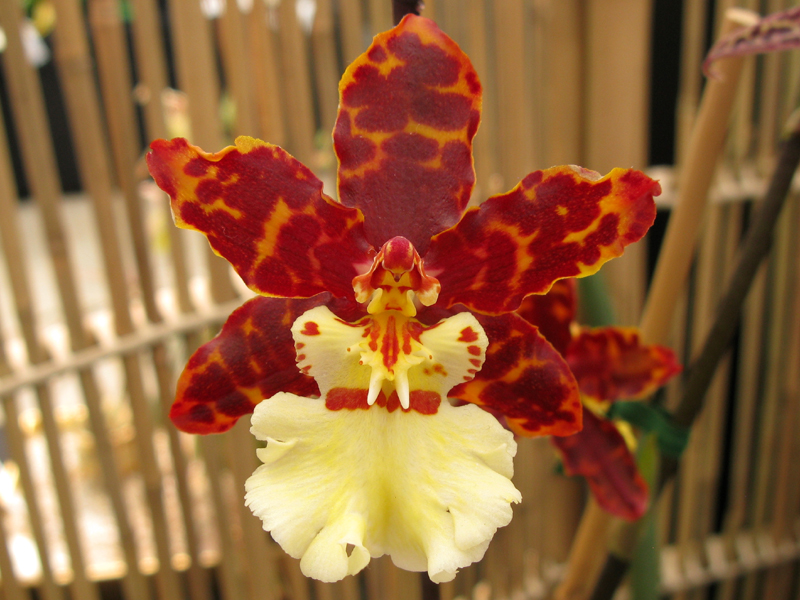
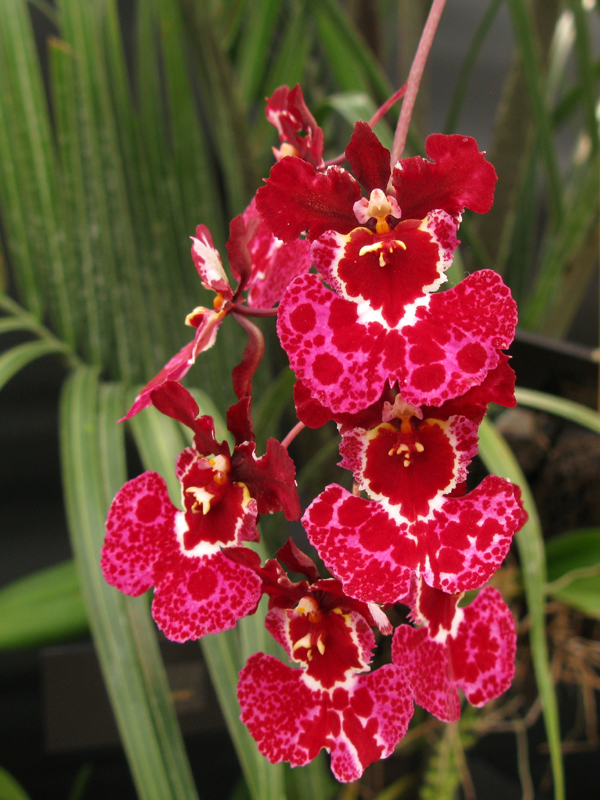
Odontocidium Sunlight

It never fails. The weather outside has to be absolutely horrid, otherwise it would be a break with tradition, it seems. On the day
CJ and I drove to Tagawa Gardens for the 2010 Denver Orchid Society Spring Show, the interstate was shrouded in fog. The Rockies had completely disappeared, but we felt them as a solid presence somewhere beyond the grey banks to the west.

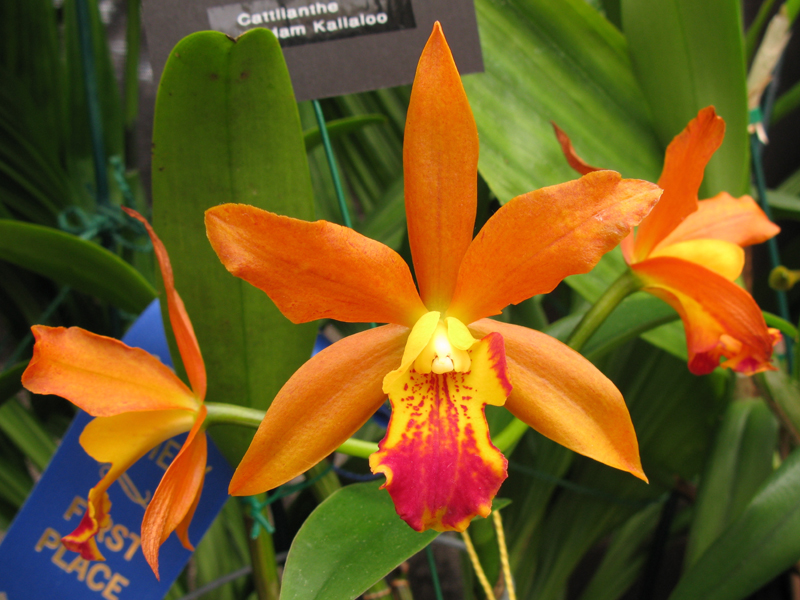
Cattlianthe Madam Kallaloo

I'm always sort of disappointed when the displays incorporate intricate carnivorous plants and gorgeous bromeliads, because these plants have no place at an orchid show, however beautiful and interesting they may be. Worse is when they incorporate props, like fiber optic UFOs and (shudder) garden gnomes. Aren't orchids amazing enough? Just let them be, people. Thankfully, the Denver Orchid Society has too much good taste for that kind of thing. The well-constructed displays were fleshed out with lush,
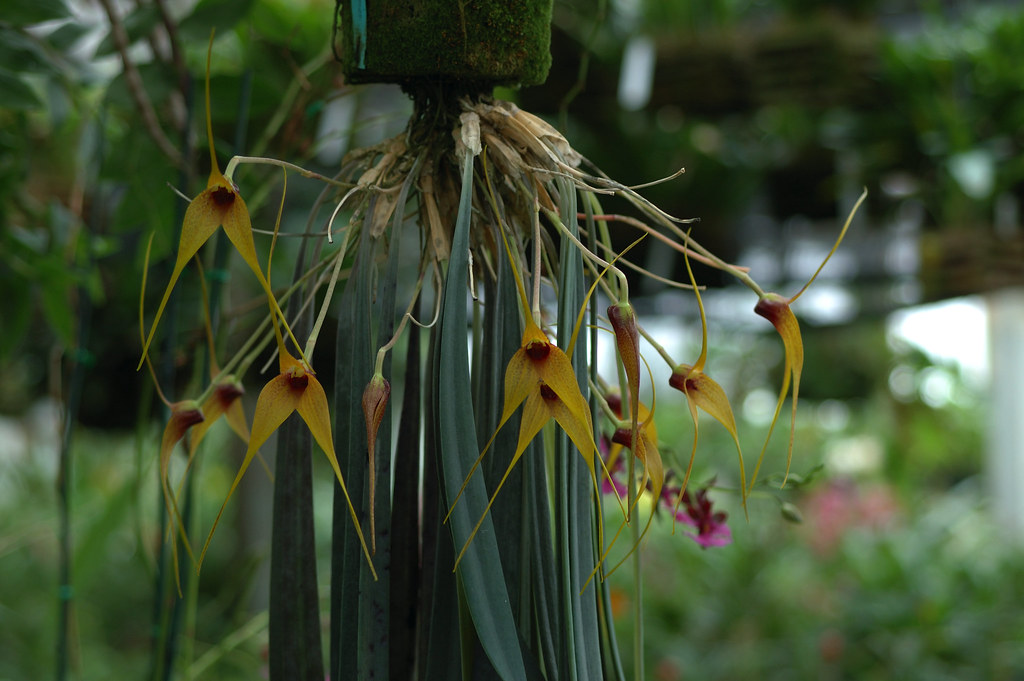
appropriate backdrop foliage; this fit the 'Orchid Oasis' theme for the show very well. Orchids from the genus Masdevallia and complex intergeneric hybrids from the Oncidiinae subtribe featured heavily in this season's show. For those of you who have absolutely no idea what the hell all that Latin means, here are some pictures of lovely orchids to enjoy!

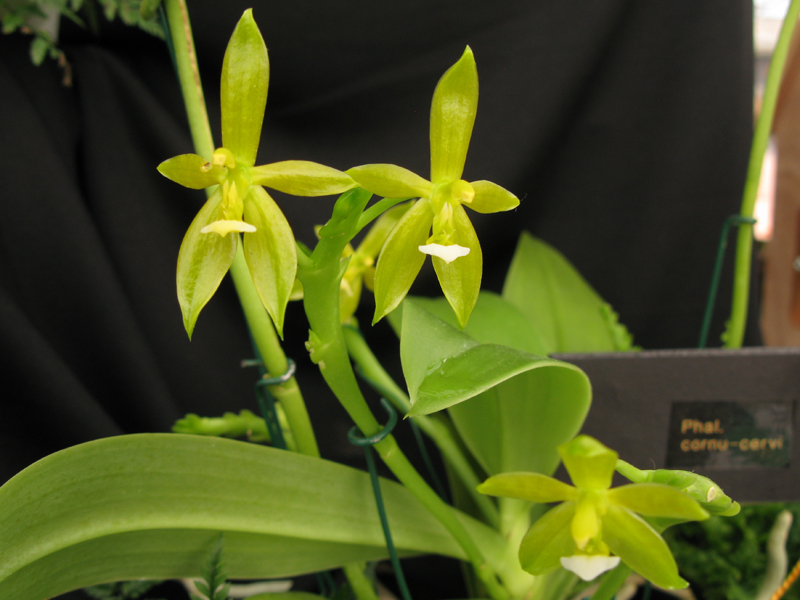
Phalaenopsis cornu-cervi

Large, round, flat and near-ubiquitous, those pink and white hybrid moth orchids can be found in the house plant section of almost any grocery store these days. Coming face-to-face with their wild relatives is therefore always exciting, especially when they look entirely different. Feast your eyes on a lime-flowered version of
Phalaenopsis cornu-cervi (above). The species name of this Southeast Asian moth orchid means deer-antlered, and it has curiously flattened inflorescences. With care, it can flower several times a year, unlike the store-bought hybrids, which generally flower only once a year. I also appreciate the fact that it has a starry shape, and not the flat, rounded shape we've come to expect from Phalaenopsis orchids.

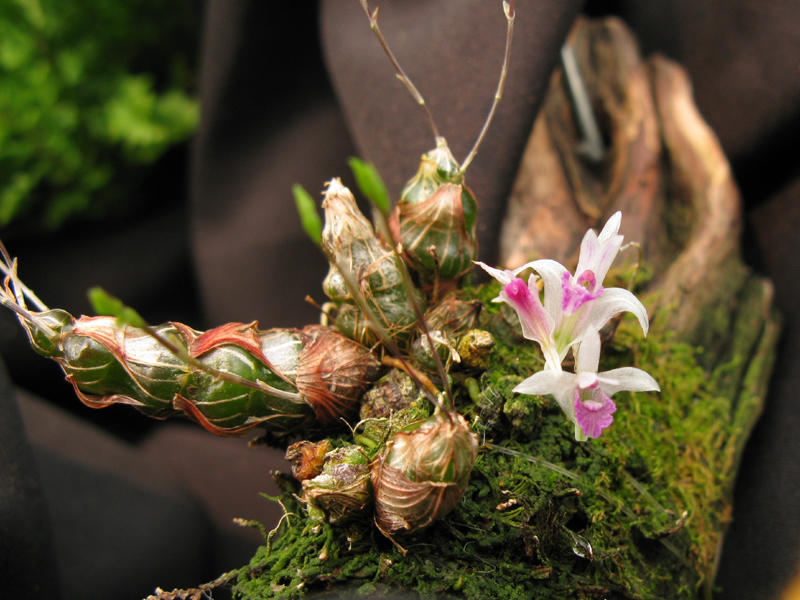
Dendrobium garrettii

This adorable
Dendrobium from Thailand bears minute flowers on leafless pseudobulbs that resemble a stack of green grapes. I think this would be a gorgeous addition to a cool little terrarium. The genus Dendrobium with its infinite variety: it's easy to see why it's my favourite orchid genus.

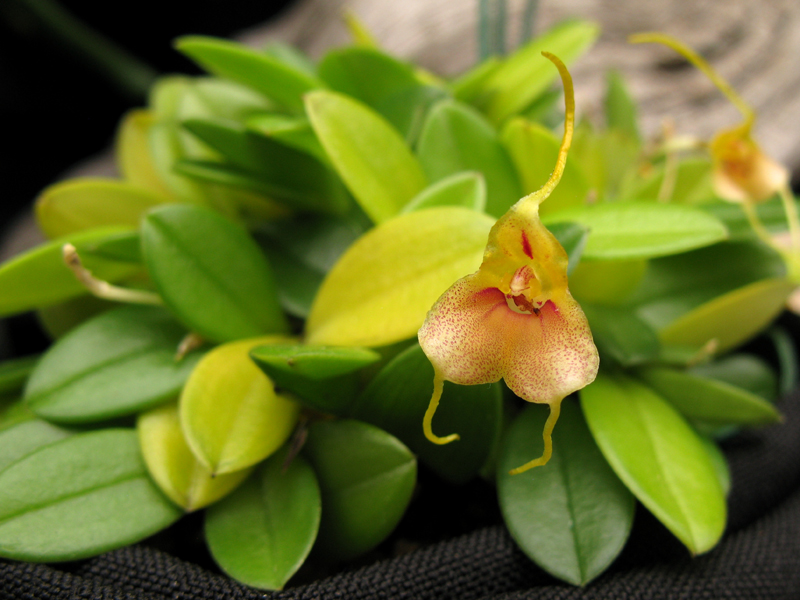
Masdevallia pteroglossa

When it comes to
Masdevallia, virtually the whole genus is composed of miniature species. Masdevallia pteroglossa, from the cool cloud forests of Colombia, is a pixie among dwarves: the entire plant above would easily fit inside a coffee mug. The species name means wing-tongue, which refers to the dimunitive lip, which is only visible as a small red structure in the centre of the triangular flower.

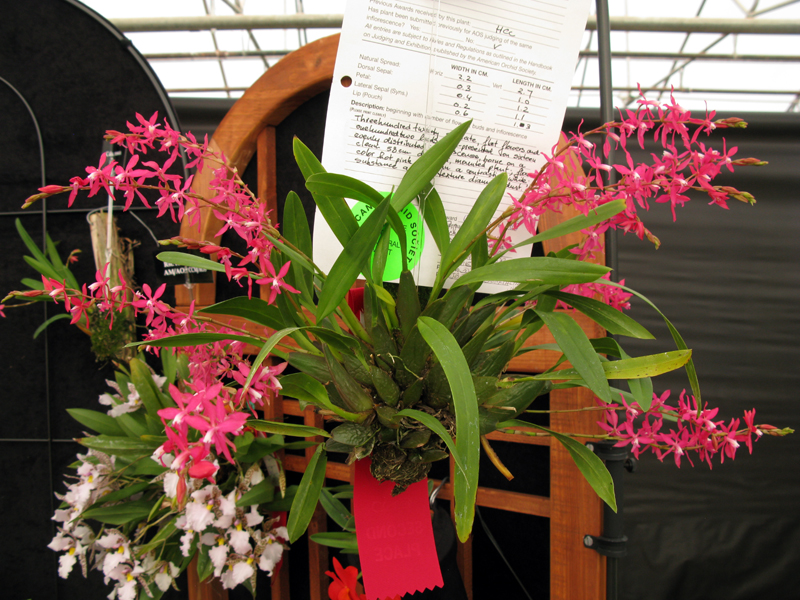
Cochlioda rosea 'Laramie' HCC/AOS

This lovely specimen plant above was awarded a CCM (Certificate of Cultural Merit) by the
American Orchid Society. This coveted award is only bestowed on exceptionally well-grown plants. It commends the patient and skilled grower able to bring out the full potential of an orchid. This Cochlioda, a member of the Oncidiinae subtribe, had a total of 16 inflorescences on it, bearing 102 buds and 320 open flowers! The judges described the hot pink petals as having the texture of "diamond dust". Cochlioda rosea is native to the rain forests of Peru and Ecuador, where it must be an awe-inspiring sight.

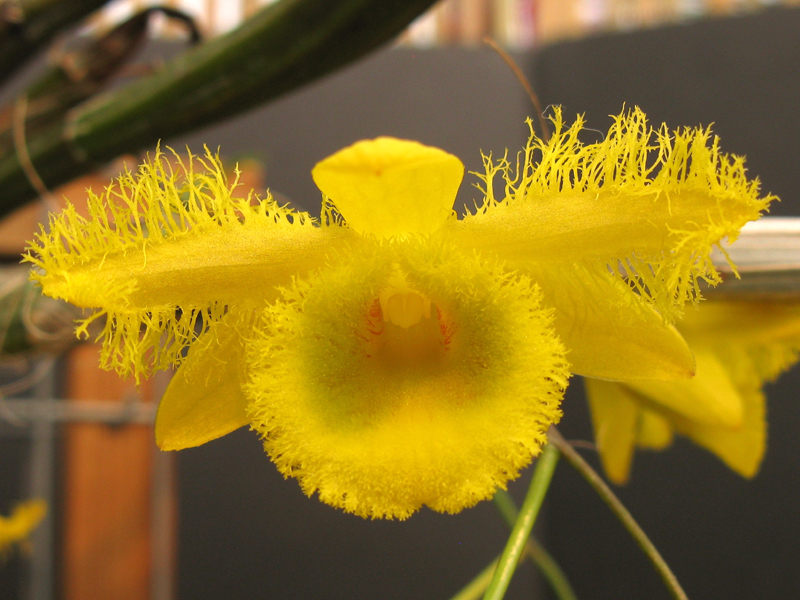
Dendrobium harveyanum

With more variations than you can shake a large stick at, the genus
Dendrobium surprised us once again with the fuzzy-as-a-bumble-bee Dendrobium harveyanum. I loved the crystalline texture, the deeply fringed petals and the sweet scent. It appears dusted with pollen, but (as is typical for all orchids) the pollen is actually carried as sticky masses behind the anther cap, the small circular structure in the centre of the flower. This orchid is native to places in Southeast Asia with a monsoonal climate, and needs a dry winter rest in order for the flowers to develop in early spring.

Dendrobium Spring Doll 'Sweetheart' HCC/AOS

The absolutely enormous orchid above was awarded Best Flower and Best Grown Plant.
Dendrobium Spring Doll 'Sweetheart' is one of the so-called soft cane Dendrobium hybrids, and was originally bred by the Hawaiian firm H & R Nurseries. Soft canes have Dendrobium nobile and related species in their pedigree. Like Dendrobium harveyanum, soft canes need less water during their winter rest. This induces masses of flowers right before the growing season. I would recommend soft canes as good beginner's orchids, as they thrive on benign neglect.

Tolumnia Jairak Rainbow

Tolumnia is an interesting genus, also part of the Oncidiinae subtribe. They are found on the islands of the Caribbean, where they grow as twig epiphytes constantly soaked by rainstorms and dried by the tropical sun. This requirement for rapid wet-dry cycles tends to make them slightly tricky to grow well. However, this example of the hybrid Tolumnia Jairak Rainbow was a carnival of a plant: several inflorescences bearing gaudy coral pink blossoms stained with carmine, like a gaggle of calypso dancers ready for a street parade.

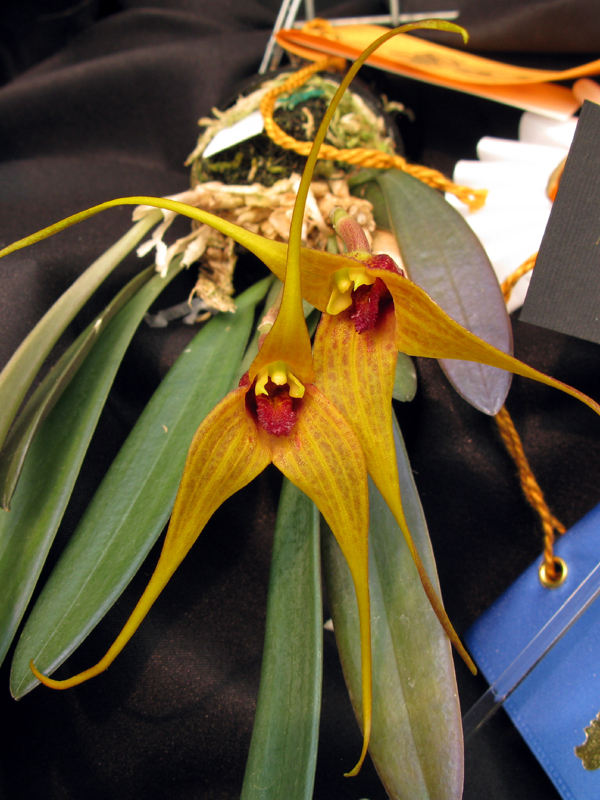
Masdevallia caesia

At every orchid show, there has to be one favourite.
Dendrobium species tended to be the attention whores of orchid shows past. This time around, I became obsessed with a rather bizarre Masdevallia from southwestern Colombia: Masdevallia caesia. It has blue-grey leaves. It grows upside-down. It needs cool to cold growing conditions, like you'd find where the South American rain forests meet the Andes and the trees are constantly bathed in clouds. It has flowers that can be 23 cm long (and you thought all Masdevallia were small). The flowers have an unpleasant smell, and are pollinated by flies attracted to the furry red lip, which resembles decaying meat. It's exactly the sort of plant that sends those suffering from orchid fever into pure delirium.

For more photos of my orchid show exploits, please visit my
Flickr photostream.