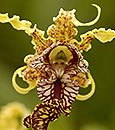
 After reading FJ's comments on the kinkiness of orchids, I've decided to have an opinion poll. So what I'd like you all to do, is share your views on the following:
To quote FJ: do you think there's something about the shape of orchid flowers 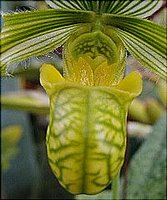 that is somehow more obscene than your regular garden variety daisy? In other words, are orchids obscene, overtly sexual vegetable likenesses of human reproductive anatomy? Luscious pink folds; musky scents; inflated, veined pouches; dripping nectar. Orchids are, as Uncle Monty from Withnail and I would put it "prostitutes for the bees". Is that where a lot of our fascination with them lies? How come orchids seem to be especially popular with
 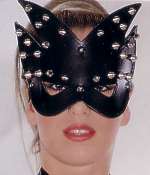 geriatrics, then? Is an orchid show a venue to show off your 'fertility' well after the battery of your biological clock fell out? Evolutionary speaking, orchids have their origins in the hot, steamy lowlands of South East Asia. This is also where snakes evolved. Both are symbols of sexuality. South East Asia is also a hotspot for sex tourism. Coincidence? The word orchid is derived from the Greek word orchis, meaning testicle. The underground tubers of Orchis were traditionally used as aphrodisiacs and to increase fertility. Is the giving of orchids a more intimate affair than just buying a lover a bunch of carnations? Something more lusty?
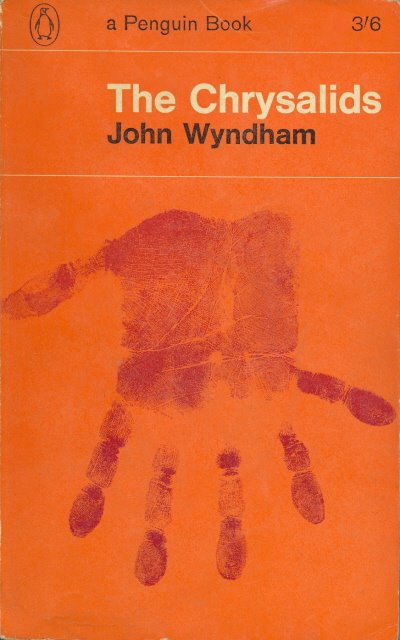
 There's something delicious about the graphic quality of the covers designed for Penguin paperbacks during the 1960's. They are renowned for their dark, suggestive images and remain very popular under Penguin Collectors. The cover layout of this period was designed by Romek Marber and introduced in 1962. The Marber Grid uses different weights of the Intertype Standard typeface, which is a version of Berthold's lovely and rounded Akzidenz Grotesk. This layout allows a lot of room for an illustrative element, compared to Penguin covers from the 1950's.
My favourite among the Marber Grid covers, and probably my favourite cover design of all time, is for The Chrysalids, by John Wyndham. My copy is a 1965 reprint inherited from my mother and is one of the only books she ever wrote her name in. It therefore holds a certain amount of sentimental value for me. For the anoraks out there, it's Penguin no. 1308 (this was in the decades before ISBN numbers were implemented by the company). The cover illustration is by John Griffiths and features a simple hand print the colour of dried blood. Simple, elegant, beautiful.
But look closer, for that hand has six fingers on it...
"When I did succeed in getting the foot free, it looked queer: I mean, it was all twisted and puffy - I didn't even notice then that it had more than the usual number of toes...."
The Chrysalids, written in 1955, is a great example of 1950's post-apocalyptic science fiction. It brings together all of our fears about nuclear disaster and the harsh realities of DNA: mutation, religious extremism, sterilization, wastelands, human suffering, eugenics, exile, the wrath of God, evolution. The characters in the book have to survive in a barren world hundreds of years after some nuclear holocaust. They uphold the belief that Man is created in God's image and that any deviation from the image is a mockery of that sacred bond. When a mother gives birth to a mutant child, the very act of giving it life is blasphemy.
"The enemies of God besiege us. They seek to strike at Him through us. Unendingly they work to distort the true image; through our weaker vessels they attempt to defile the race. You have sinned, woman, search your heart, and you will know that you have sinned."
Mutant crops are burned. Mutant livestock is slaughtered. But the true fear of the ignorant is that Deviation might manifest itself in themselves. Therefore extra digits are amputated, mutant newborns are hidden from the authorities... or killed. But the abominations and edge dwellers do not take abuse lying down and the story really takes off when a group of supposedly normal children discover their ability to communicate telepathically with one another and then start to seek out others of their kind.
"One of the hands which held a bow had six fingers; one man displayed a head like a polished brown egg, without a hair on it, or on his face; another had immensely large feet and hands; but whatever was wrong with the rest was hidden under their rags."
Yet the way of life on this planet has always decreed that new species supercede the old. The 'normal' people are unwilling to accept this change, which is what makes them obsolete. In the wasteland of the future, adaptedness has been sacrificed for adaptibility. A new central dogma of biology. Out of the chrysalis of our former selves, our new improved design will emerge. It is inevitable.
"The living form defies evolution at its peril; if it does not adapt, it will be broken. The idea of completed man is the supreme vanity: the finished image is a sacrilegous myth."
The Chrysalids is as powerful and relevant in the 21st century as when it was written more than half a century ago. And this from the man who wrote that dreadful book The Day of the Triffids...
 I woke up this morning at about 08:30. Yes, I'm still giving my circadian clock free reign. As I walked into the kitchen, I heard an eerie noise outside: teeoo, teeoo, teeoo. Initially, I assumed that it must be a distressed cat, or maybe a small child. Staring at the neighbour's roof, I tried to locate the origin of this strange and sad noise. Suddenly a large, dark bird almost 50cm long spread its wings and flew out of a nearby leopard tree, still making that forlorn call. I held my breath. It circled once, then flapped and glided in a sine curve pattern, heading east. This was not the normal straight flight pattern of a sparrow. It was exotic, indolent, sinuous. Tropical. I felt like I had seen a roc straight out of The One Thousand And One Nights. I waited outside for a long time, but it did not return.It was a Tockus nasutus, or African grey hornbill. It must have been lost: this is a Bushveld bird, an omnivore of the savannah. It does not occur on the Highveld and definitely not in built-up areas. This is what I like about living in Africa. Every once in a while you'll read in the newspaper about a leopard that got into someone's back yard, or about a hippo cooling off in a municipal swimming pool. No matter how much urban sprawl, commerce and human greed destroys the beauty and diversity of nature, something will survive. And thrive."Tweedledum and TweedledeeAgreed to have a battle;For Tweedledum said TweedledeeHad spoiled his nice new rattle .Just then flew down a monstrous crow,As black as a tar-barrel;Which frightened both the heroes so,They quite forgot their quarrel."- Alice's Adventures in Wonderland, Lewis Carroll (1865) May some magnificent creature frighten you out of your quarrels today.
Interesting day already. After driving the 14km from home to get to the lab, I realise that I never downloaded my progress report off my computer at home. I need to hand this in today, so that our research group can compile our annual research report for the Winter Cereal Trust. These are the people who fund our research.
Oh, well. I suppose this is what comes of staying up until 02:30 in the morning, drawing one gene expression graph after another. Now I'll have to go back home to get it. It's funny how things tend to slow down when you're so damn close to the end. My skull is stuffed with cotton wool. Think I also left my sense of humour at home. Hmmm...

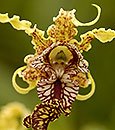

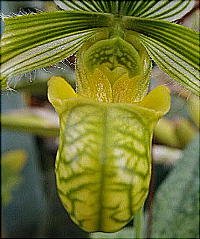 that is somehow more obscene than your regular garden variety daisy? In other words, are orchids obscene, overtly sexual vegetable likenesses of human reproductive anatomy? Luscious pink folds; musky scents; inflated, veined pouches; dripping nectar. Orchids are, as Uncle Monty from Withnail and I would put it "prostitutes for the bees". Is that where a lot of our fascination with them lies? How come orchids seem to be especially popular with
  geriatrics, then? Is an orchid show a venue to show off your 'fertility' well after the battery of your biological clock fell out? Evolutionary speaking, orchids have their origins in the hot, steamy lowlands of South East Asia. This is also where snakes evolved. Both are symbols of sexuality. South East Asia is also a hotspot for sex tourism. Coincidence? The word orchid is derived from the Greek word orchis, meaning testicle. The underground tubers of Orchis were traditionally used as aphrodisiacs and to increase fertility. Is the giving of orchids a more intimate affair than just buying a lover a bunch of carnations? Something more lusty?